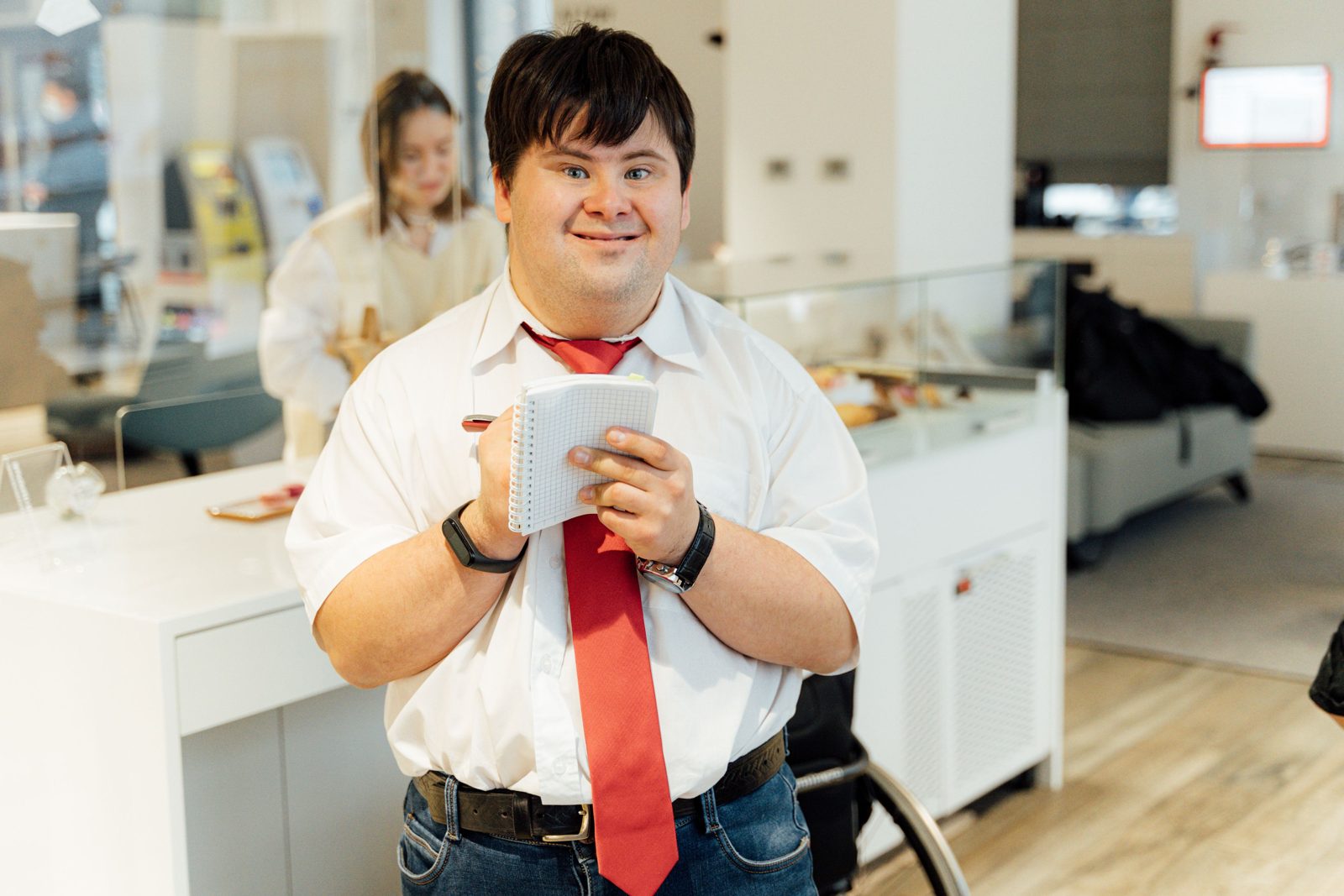
Hosting a public storytelling event with people with IDD
Use this guide to walk through the steps of hosting a public storytelling event with people with intellectual and developmental disabilities (IDD) in your community. You will host an hour-long live event with five storytellers who have IDD. The story presentations will be followed by a panel discussion including the storytellers.
This guide is informed by the experiences and expertise of WORDSLAW and the Reynolds Journalism Institute. Please take what you need and adapt it for your newsroom.
Projects
-
State of Denial
Virtual event held during the reporting process on a year-long project. Readers were invited to attend and encouraged to reach out if they had information they wanted reported. ProPublica's Local Reporting Network and the Arizona Daily Star.
Read more about State of Denial (opens in a new tab) -
What is Home?
Virtual event held following publication of a long form story. Center for Public Integrity, also published by SLATE and KJZZ, the NPR member station in Phoenix.
Read more about What is Home? (opens in a new tab) -
Love is Always
In-person event following publication of a radio series. KJZZ with support from the USC Annenberg Center for Health Journalism.
Read more about Love is Always (opens in a new tab) -
WORDSLAW
Virtual event held at the conclusion of a Nieman Visiting Fellowship during which WORDSLAW was created.
Read more about WORDSLAW (opens in a new tab) -
Center Our Stories
Virtual event held in collaboration with the Grassroots Project at the Human Services Research Institute and the National Center for Disability and Journalism.
Read more about Center Our Stories (opens in a new tab)
Set your goals
Setting a goal will allow you to orient your planning team. Here are some example goals that this event can help achieve. Goals and intentions for the project will help you pick a storytelling theme. Pick one (or more) to align on a shared purpose:
-
Educate news consumers about a community they might not know much about.
Your audience might not know much about this community, yet people with IDD are our neighbors and friends. This event will allow you to champion this community and allow your newsroom to be a relationship builder.
-
Make meaningful space for people with IDD by giving them the agency to tell their own stories.
Creating an environment where a community that is often overlooked fulfills can use their own voice to tell their own stories is meaningful and helps the newsroom build trust.
-
Discover how to connect with other vulnerable communities through storytelling.
This guide is specifically for working with the IDD community, but the methods and considerations can be applied to any community.
-
Gain insight into how some members of the IDD community view news coverage generally and of their population.
Understand any missing gaps of coverage or points of weakness in your newsroom’s coverage of this community.
-
Learn more about members of the IDD community to assist with future coverage.
A public storytelling event allows journalists to gain knowledge on how to best work with this community and their support systems, which can make taking the steps to increase coverage be more attainable.
-
Develop sources.
Step by Step
Your practical goal is to host a storytelling event that showcases the stories of people with IDD in your community. You can alter the plan, but we suggest five storytellers and in-person workshops and show.
Start the guide- Step 1: Identify who in your newsroom will work on this project.
- Step 2: Choose a theme
- Step 3: Pick a date and plan a timeline
- Step 4: Plan a budget
- Step 5: Find a place to hold your event.
- Step 6: Identify the storytellers.
- Step 7: Draft a plan for promotion.
- Step 8: Hold your workshop(s).
- Step 9: Rehearse, rehearse, rehearse.
- Step 10: Design and print program.
- Step 11: Plan your Run of Show
- Step 12: Add ons for your event
- Step 13: Post event feedback and follow up
Best practices and ethics
As you are planning your event, think about these things to guide your thought processes.
-
Do not objectify disability.
Portray storytellers as people, not sources of inspiration. Pick neutral themes that give agency and let people share what they are comfortable sharing.
-
Be mindful of a storyteller’s safety.
This is not about teasing out horror stories. If someone shares something that worries you, contact the program director you are working with.
-
Keep focused.
The event is for people with IDD — not their guardians, caregivers or teachers. Those voices already get more coverage.
-
Tread lightly.
Be a community member first. Do not push anyone to tell you anything, particularly anything controversial.
Why public storytelling matters
Public storytelling is one of the oldest forms of communication. WORDSLAW is designed to re-set how we — and our readers, listeners and viewers — think about people with intellectual and developmental disabilities, by creating space and opportunity for them to tell their own stories.
Read more about why public storytelling matters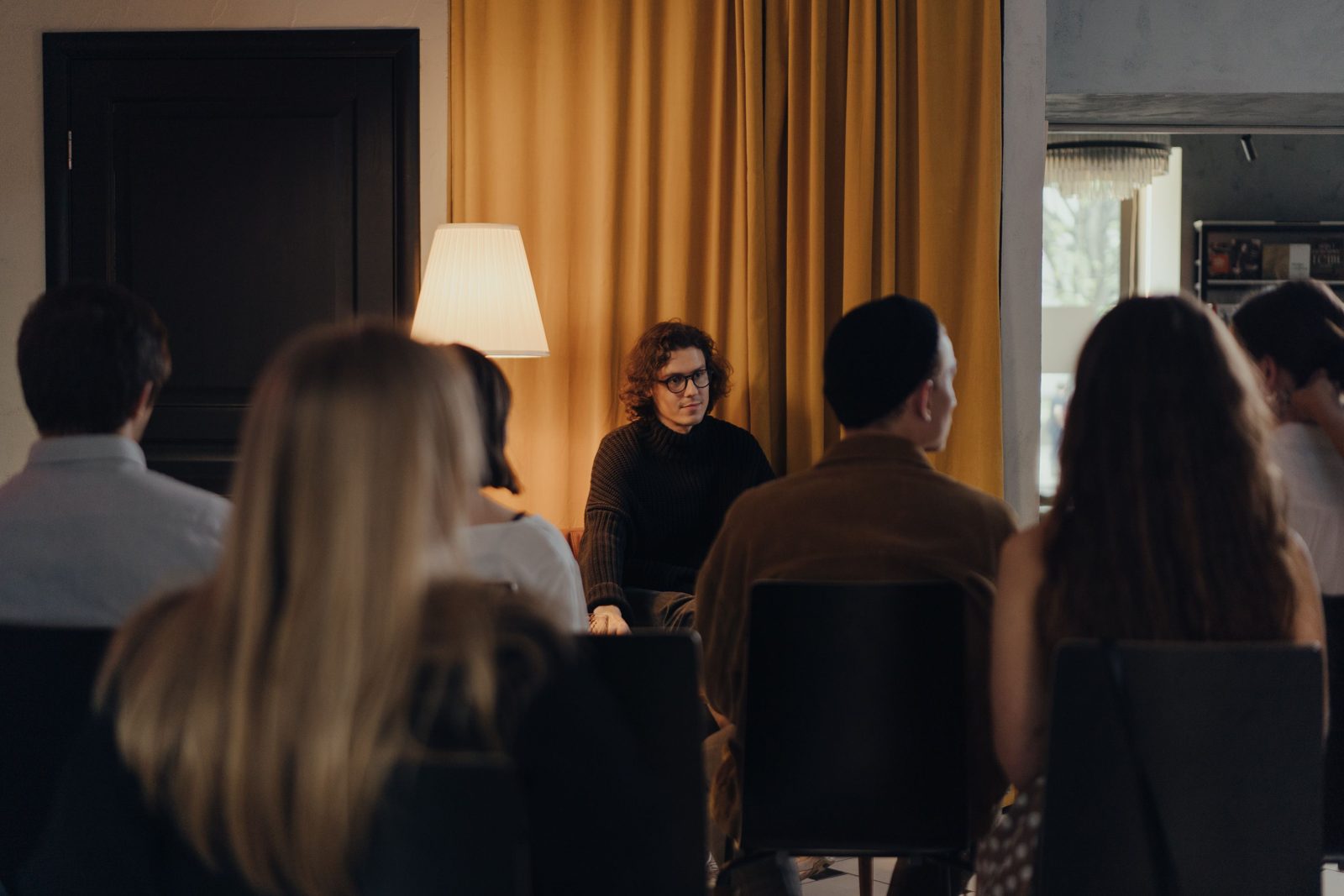
Resources
Worksheets, checklists, workshop slides and a run-of-show template to plan your event — plus plain-language translation help and national groups to partner with.
Explore resourcesAbout this project
This storytelling guide is the result of a partnership between the Reynolds Journalism Institute based out of the University of Missouri and Amy Silverman, a Phoenix-based journalist who covers disability and created WORDSLAW, a storytelling program for people with intellectual and developmental disabilities.