
Why public storytelling matters
Public storytelling is one of the oldest forms of communication. Even before people created alphabets and the notion of reading and writing as we know it today, members of ancient civilizations illustrated “stories” on the walls of caves. Fast forward centuries – and today storytelling is everywhere. The popularity of public radio programs like The Moth and This American Life increased visibility and demonstrated the power of using our personal stories to connect to others. Public relations professionals have latched onto the concept, and today the word storytelling finds its way into just about every marketing campaign.
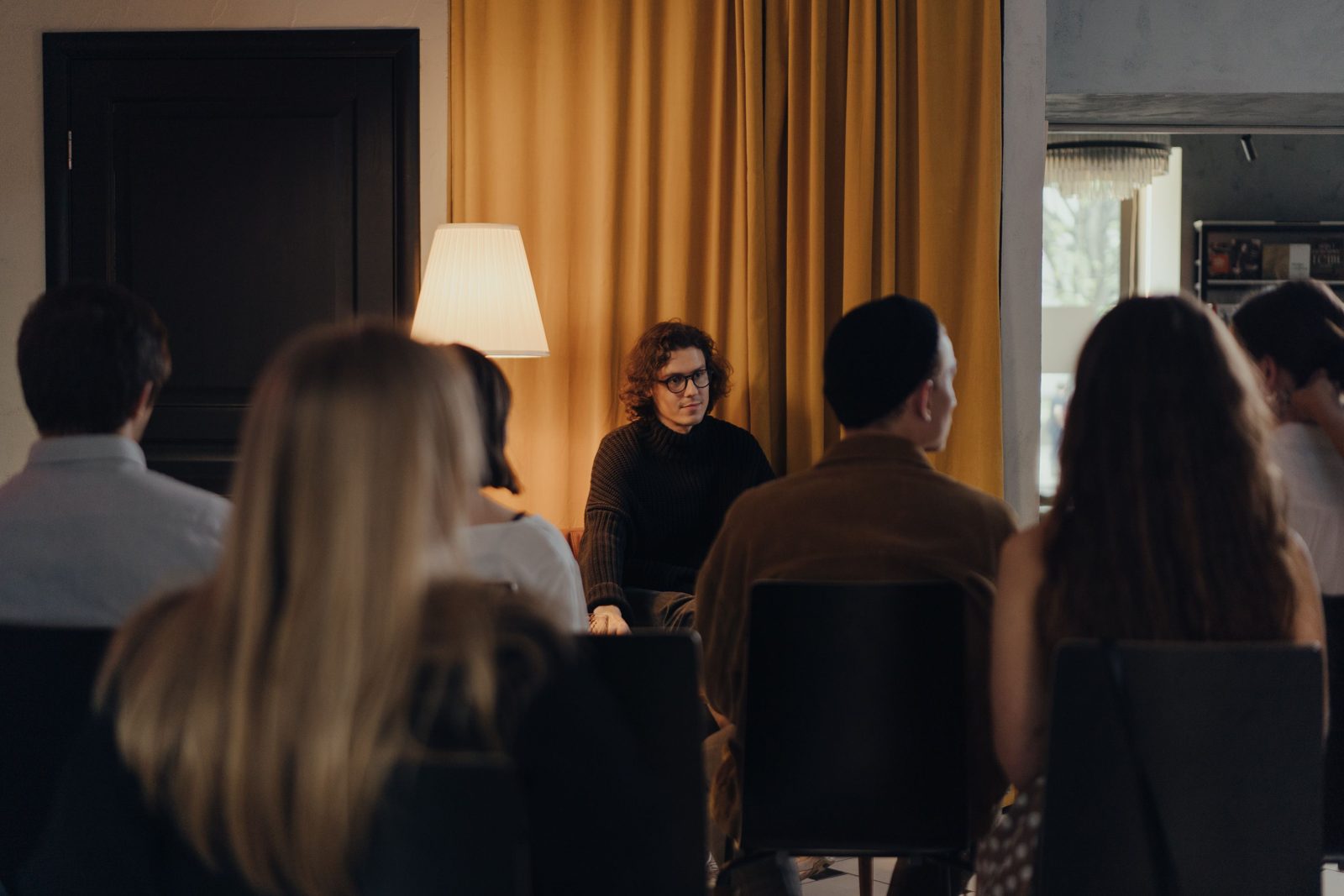
But storytelling remains a powerful tool for building community, not just shilling products — particularly when focused on the stories of the most vulnerable and overlooked among us. Ear Hustle is a podcast produced by those currently and formerly incarcerated at San Quentin State Prison in California. Story Corps has a program featuring members of the military community.
This method of community engagement is particularly beneficial in connecting with people with intellectual and developmental disabilities – those who identify as neurodivergent, people with autism, as well as those with genetic differences like Down syndrome or other congenital differences including cerebral palsy and epilepsy. For example, Telling It Our Way, an award-winning podcast sponsored by WGTE, the Toledo, Ohio public radio station. Created by two disability studies professors, the project features people with IDD telling true stories about their lives.
This particular storytelling practice is groundbreaking in that many who haven’t ever been around people with IDD might not know that anyone from this community could stand on a stage and read or recite a story they’ve written about themselves. Or, even if they could, that it would be possible to decipher what they’re saying. In this way, it is possible for an audience to view people with IDD as members of the greater community at large – and consider ways in which their lives matter.
Storytelling can also serve as an important reminder to journalists to center our coverage on the characters we are reporting on – rather than writing around them.
The journalism industry has come a long way in its coverage of people with disabilities, but we need more and better work – particularly when it comes to people with intellectual and developmental disabilities. Too often the stories about this population focus on either horrible living conditions or sugary-sweet inspirational stories, neither of which really tell news consumers much about what everyday life is for people with IDD.
To complicate matters, by the nature of these kinds of disabilities, which can make both access and communication very difficult, it’s often difficult or impossible to interview the people with the disabilities themselves. So often we turn to those around them: family members, paid caregivers, medical professionals, educators, government bureaucrats – and so on.
That does not often allow us to tell the whole story. Or even come close. That’s where public storytelling comes in. WORDSLAW is designed to re-set how we (and our readers/listeners/viewers) think about people with intellectual and developmental disabilities by creating space and opportunity for allowing them to tell their own stories.
This is not a perfect plan – for various reasons, it’s often not possible for a person with IDD to speak out, both literally and figuratively, at least not in the ways we typically consider. But it does allow for the beginning of meaningful coverage and conversations about how to better report on a population many of us are afraid of approaching for fear of saying or doing the wrong thing.
The idea is to work with people with IDD to make space for them to craft their personal stories and prepare them to get on stage — whether it’s in person, virtual or both — to perform their own piece.
About this project
This storytelling guide is the result of a partnership between the Reynolds Journalism Institute based out of the University of Missouri and Amy Silverman, a Phoenix-based journalist who covers disability and created WORDSLAW, a storytelling program for people with intellectual and developmental disabilities.
The seeds of WORDSLAW were planted in the summer of 2020, when Amy was working with ProPublica's Local Reporting Network on a year-long project about the lives of people with IDD in Arizona. The original intention was to spend months traveling the state to interview some of Arizona's most vulnerable residents in person — but the pandemic called for creative alternatives.
Amy had run storytelling events in Phoenix for many years, and her daughter Sophie, who has Down syndrome, took part in one shortly before the ProPublica project began. So the suggestion was made that a virtual storytelling event would be a way to gather community and create an environment that would make folks more comfortable sharing their own stories.
The following year, Amy further honed the efforts by creating WORDSLAW during a Nieman Visiting Fellowship with Harvard University. She went on to create events to accompany projects with KJZZ-NPR in Phoenix and the Center for Public Integrity — but had never helped anyone launch their own storytelling event.
This collaboration with RJI has provided an opportunity to break down every element of a storytelling event featuring people with IDD — and work with newsrooms to put the ideas into practice. The guide is a work in progress, we will update it as we gather more insights and information.
Special thanks to supporters and collaborators including Sriya Reddy and the Reynolds Journalism Institute, Rebecca Monteleone, James Geary, USC's Center for Health Journalism, T. Christian Miller, Beena Raghav, Maya Miller, Shoshana Gordon, James Geary, Jennifer LaFleur, Tucson Spotlight, AZPM, Caitlin Schmidt, L.M. Boyd, Baltimore Banner, Jasmine Vaughn, Cayla Harris, Make Studio, Theo Grace Quest, and all the storytellers who have shared their true stories — including Sophie Stern.
Projects referenced
- Ear Hustle (opens in a new tab) a podcast produced by those currently and formerly incarcerated at San Quentin State Prison in California.
- Story Corps (opens in a new tab) a program featuring members of the military community.
- Telling It Our Way (opens in a new tab) an award-winning podcast sponsored by WGTE, the Toledo, Ohio public radio station.